Warning signs to look for at home
1 Missing or displaced shingles
Look for gaps in the shingle rows or pieces of roofing material in your yard after strong winds. A section that looks different from the surrounding roof is worth photographing from the ground.
Missing shingles can leave part of the roof more exposed to weather. An inspector can check the affected area and nearby materials to understand the extent of the problem.
2 Curled or cracked shingles
Shingles with curled edges, visible cracks, or an uneven appearance should be checked. These changes may relate to aging materials, weather exposure, or conditions elsewhere in the roofing system.
Take note of whether the change appears in one area or across several sections. Avoid lifting shingles or trying to test them yourself.
3 New ceiling stains or recurring leaks
Brown or yellow marks, peeling paint, or a damp ceiling can point to moisture entering your home. Record when the stain appeared and whether it changes during rain.
A stain alone does not identify the source. Roof openings, plumbing, and other moisture problems may need to be investigated. If water is actively entering, request prompt professional help and stay away from wet electrical fixtures.
4 Noticeable shingle granules around downspouts
Asphalt shingles have small surface granules. If you notice a new buildup around a downspout, photograph it and mention it during the inspection.
Loose granules alone do not establish that replacement is needed. The inspector should consider the roof’s surface condition and any other signs of wear or damage alongside what you found.
5 Loose or damaged metal around roof openings
Flashing is the material used to direct water away from joints around chimneys, walls, and other roof openings. Bent, detached, or deteriorated flashing can create a route for moisture.
Some of these areas are hard to see from the yard. Mention any leak near a chimney or vent so the inspector knows where to investigate.
6 Branches or drainage problems
A fallen branch may damage roofing materials or hide the area it struck. Leaves and debris can also obstruct gutters and downspouts.
Watch for overflowing gutters during rain from a safe position. Have a qualified professional handle debris on the roof and gutter work that requires a ladder. A drainage problem deserves assessment without assuming the entire roof has failed.
7 A roofline that has started to sag
A new dip or change in the roofline needs prompt professional assessment. Sagging can indicate a concern with the roof deck or supporting structure.
Stay away from the affected area. Do not climb onto the roof or enter an unsafe attic to investigate. Tell the professional exactly what changed and when you first noticed it.
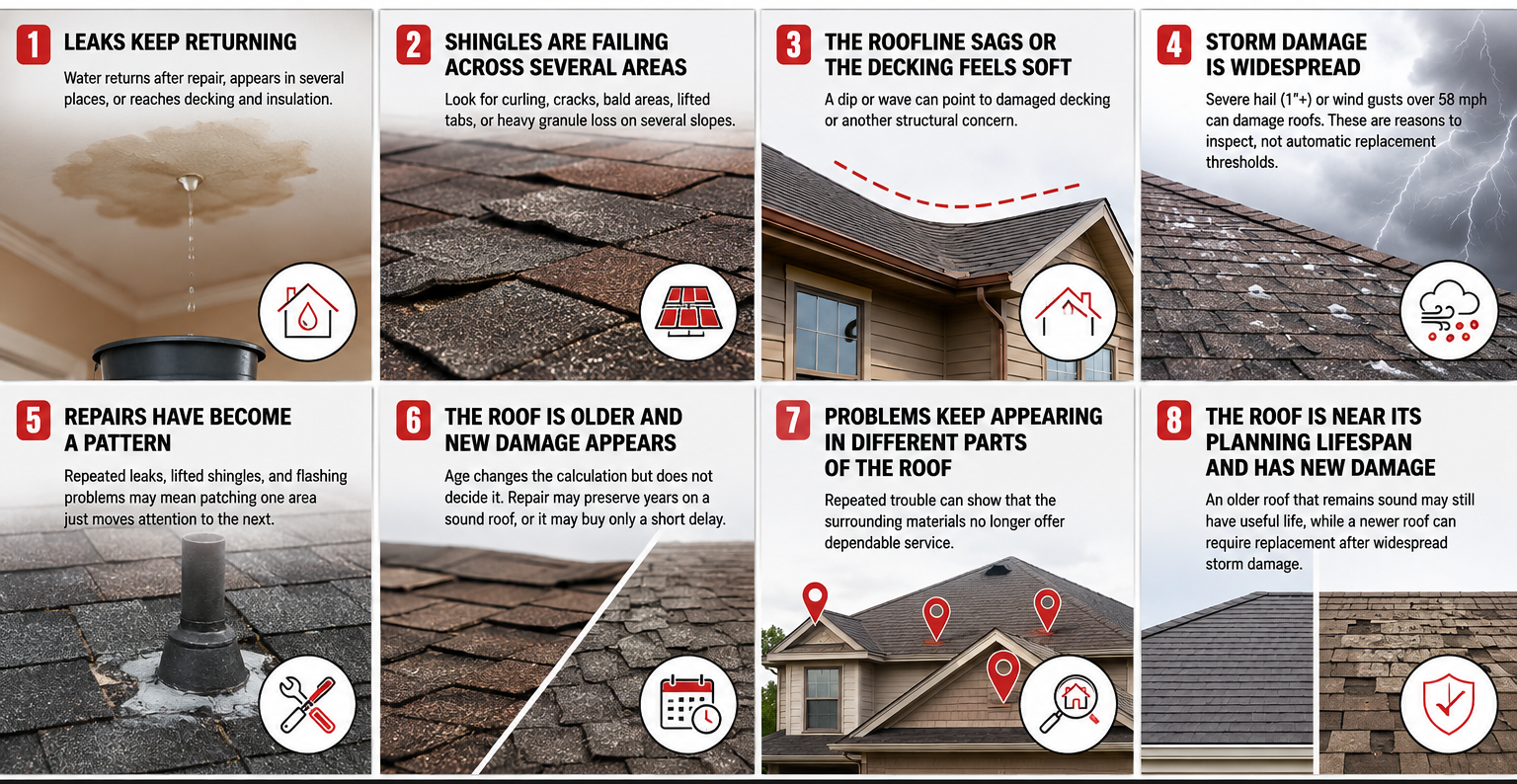
How to document what you notice
Clear records help you explain the problem when you call. You can gather useful information without walking on the roof.
- Take photos of visible changes from the ground or another safe position.
- Photograph interior stains or dripping water only where it is safe to do so.
- Write down when you first noticed the issue and whether it followed a storm.
- Keep earlier roof photos or inspection reports for comparison.
Share observations rather than trying to diagnose the cause. For example, tell the inspector that a stain gets darker during heavy rain or that shingles appeared in the yard after wind.
Dents on gutters or downspouts after hail can be a reason to have the roof checked. They do not, by themselves, establish how much damage the shingles sustained.
When to schedule a professional inspection
Arrange an inspection when you notice missing roofing materials, new moisture indoors, visible shingle changes, or a recurring problem. Active water entry and a newly sagging roofline need prompt attention.
After a significant storm, an inspection can also help when you are unsure what happened to the roof. Some conditions cannot be judged from the ground. Tell the contractor about the weather event and any changes you observed.
For routine roof maintenance, make occasional visual checks from the ground and keep inspection records. Comparing the roof with earlier photos can make new changes easier to explain.
What a documented inspection should explain
You should leave an inspection understanding what was observed and why the recommended next step makes sense. Useful findings include:
- The location and type of visible damage or wear.
- Photos or video showing relevant conditions.
- A review of accessible roof components and any inspection limitations.
- Which concerns need attention now and which can be monitored.
- A clear explanation of the recommended next step.
Ask the inspector to show you the area behind each recommendation. A photograph is more useful when someone explains what it shows and how that finding affects the roof.
Schedule a Free Roof Inspection in Oklahoma City
Should You Repair or Replace Your Roof in OKC?
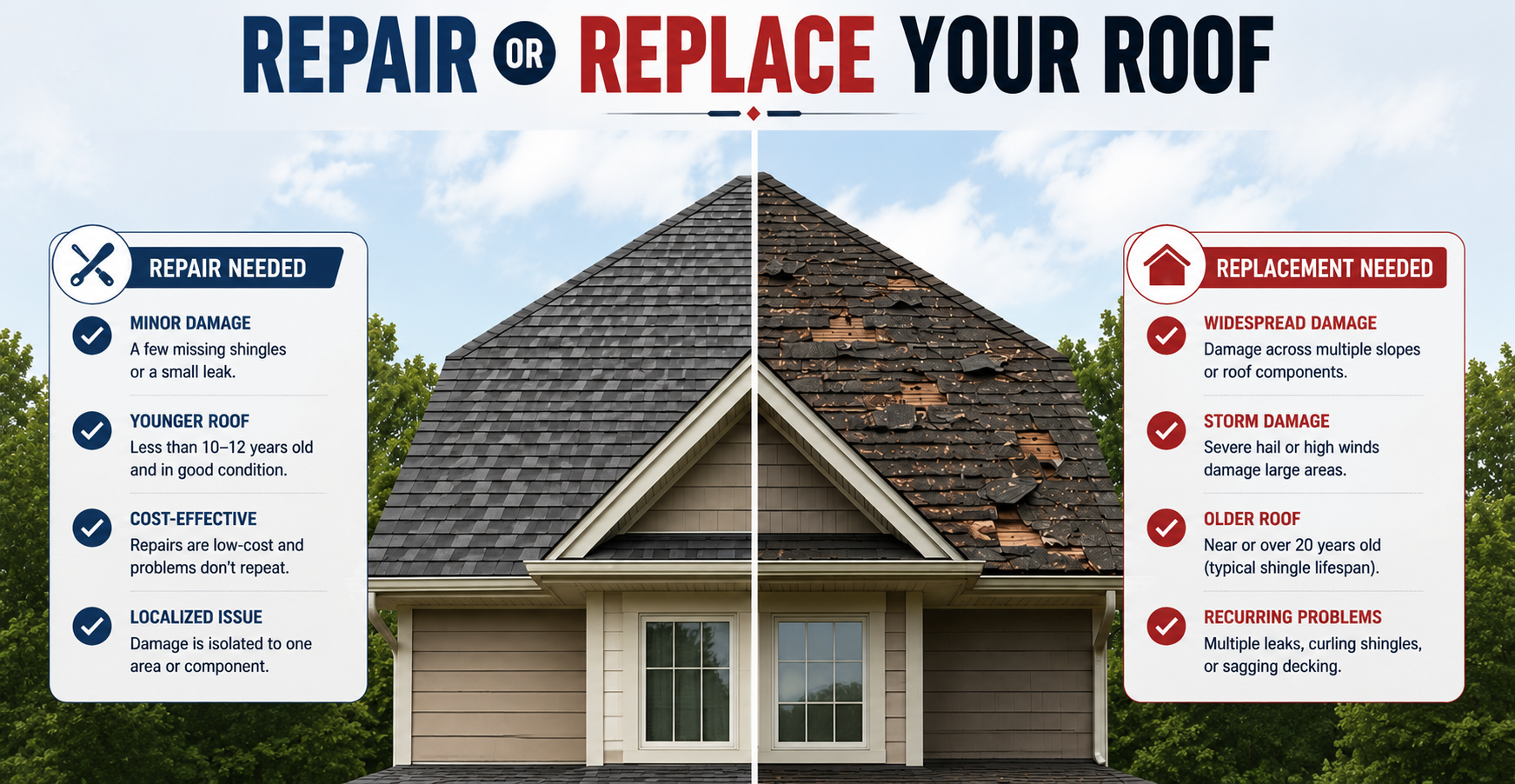
The decision to repair or replace a roof in Oklahoma depends on the amount of storm damage, the age of the shingles, and the long-term cost. A detailed inspection and photos can help determine whether a few repairs are enough or if serious storm damage requires a full roof replacement.
| A limited repair may be enough when | Replacement is more likely when |
|---|---|
| Damage is isolated to one detail or small area. | Damage affects several slopes or roof components. |
| Surrounding shingles remain flexible and serviceable. | Shingles are brittle, curling, cracked, or broadly losing granules. |
| Decking is dry and solid. | Decking is wet, soft, deteriorated, or sagging. |
| One identifiable source caused the leak. | Leaks recur or appear in different areas. |
| The roof has meaningful service life left. | Additional patching would offer little dependable life. |
| The roof is less than 10–12 years old and the shingles are still in healthy condition. | The roof is nearing or has exceeded 20 years of age. |
| Repair costs are low and the same problems do not keep coming back. | Severe hail or high winds have damaged large sections of the roof. |
Use the findings to decide what comes next
The next step depends on what the inspection finds. Some conditions may call for monitoring or limited work. Other findings may support roof replacement. Ask for the reasons in writing before approving a major project.
If you are weighing those options, read our roof repair versus replacement guide. It explains that decision in more detail.
When replacement is recommended, Hiner Roofing can provide a written scope so you know what work is proposed. You can also learn about our roof replacement services.
Frequently asked questions
Does every sign of roof damage mean I need a new roof
No. A warning sign is a reason to investigate. An inspection should establish the condition of the affected area and the wider roof before recommending what work is appropriate.
Can a roof have damage even when it looks normal from the ground
Yes. A view from the yard cannot reveal every condition. A professional can assess safely accessible areas more closely and explain any parts that could not be inspected.
Does a ceiling stain prove the roof is leaking
No. A ceiling stain indicates a moisture concern, but the source needs to be identified. Explain when it appeared, whether rain affects it, and whether the same area has been wet before.
What should I have ready before the appointment
Gather photos, previous inspection reports, and a short account of the problem. If you know the roof’s age or have records of earlier work, share those too. You do not need to climb onto the roof to prepare.
Can I book an inspection if I am unsure about replacement
Yes. Hiner Roofing offers free documented roof inspections to help homeowners understand the condition first. You can review the findings and ask questions before deciding whether to move forward with replacement.