If you are asking, “When should you replace your roof in Oklahoma?” you may be caught between two worries: ignoring damage that will cost more later and agreeing to a roof you do not need. This guide is for Oklahoma homeowners who want a clear answer based on condition, not pressure.
8 Signs You Need a New Roof in Oklahoma City
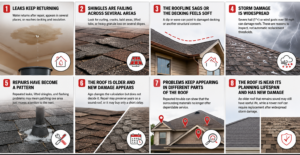
1. Leaks keep returning
A single leak may come from repairable flashing, a vent, or one damaged area. Replacement becomes more likely when water returns after repair, appears in several places, or reaches decking and insulation. The pattern matters more than one stain.
2. Shingles are failing across several areas
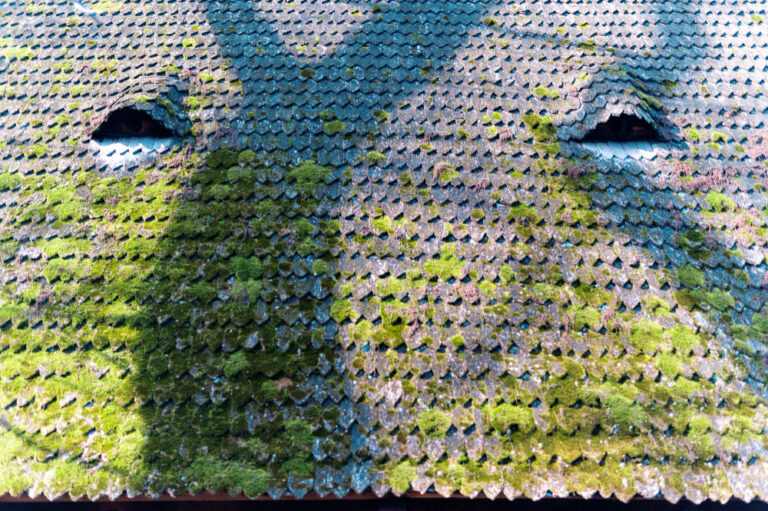
One missing shingle does not equal a new roof. Look for curling, cracks, bald areas, lifted tabs, or heavy granule loss on several slopes. New shingles may not seal reliably when the surrounding material is brittle.
3. The roofline sags or the decking feels soft
A dip or wave can point to damaged decking or another structural concern. Stay off the roof and arrange an inspection promptly, especially if sagging appears with attic moisture, daylight, or an active leak.
4. Storm damage is widespread
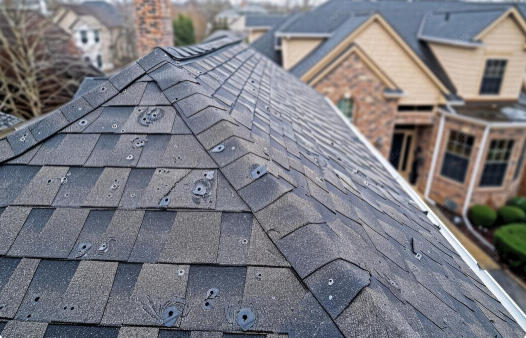
The National Weather Service defines a severe thunderstorm as capable of producing hail at least 1 inch in diameter or wind gusts over 58 mph and notes that hail this size can damage roofs. These are reasons to inspect, not automatic replacement thresholds. Material, age, installation, and storm path affect the result.
5. Repairs have become a pattern
One isolated repair is different from several leaks, lifted shingles, and flashing problems. Repeated work may mean patching one area simply moves attention to the next weak spot.
6. The roof is older and new damage appears
Age changes the calculation but does not decide it. Repair may preserve years on a sound roof. On a widely worn roof, it may buy only a short delay.
7. Problems Keep Appearing in Different Parts of the Roof
Repeated trouble with shingles, flashing, penetrations, or leaks can show that the surrounding materials no longer offer dependable service. Ask the inspector to explain whether each issue is isolated or part of a larger pattern.
8. The Roof Is Near Its Planning Lifespan and Has New Damage
Age is a planning signal, not an automatic replacement date. An older roof that remains sound may still have useful life, while a newer roof can require replacement after widespread storm damage. Consider age together with material condition, ventilation, installation quality, maintenance, and storm history.
If damage covers multiple slopes, replacement may be more dependable than scattered repairs. Hiner Roofing’s hail damage roof repair page explains the storm-specific process.
How Long Does a Roof Last in Oklahoma?
There is no single guaranteed Oklahoma lifespan. As a general planning range, asphalt shingles often last about 20–30 years, while a well-maintained metal roof may last 50 years or more. GAF’s residential roofing guidance notes that weather, installation, and maintenance can change those ranges.
| Roofing material | General planning range | Oklahoma factors to consider |
| Asphalt shingles | About 20–30 years | Hail, high wind, heat, ventilation, workmanship, and storm history can shorten useful life. |
| Metal roofing | 50+ years when well maintained | Panel type, coating, fasteners, flashing, installation, and severe-weather exposure still matter. |
Do not treat warranty length as a promise that a roof will perform for that entire period. If you do not know the roof’s age, check purchase documents, invoices, permit history where available, or ask an inspector to estimate it from the materials and condition.
Should You Repair or Replace Your Roof in OKC?
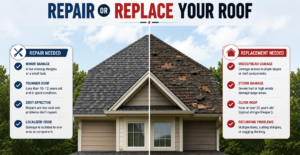
The decision to repair or replace a roof in Oklahoma depends on the amount of storm damage, the age of the shingles, and the long-term cost. A detailed inspection and photos can help determine whether a few repairs are enough or if serious storm damage requires a full roof replacement.
| A limited repair may be enough when | Replacement is more likely when |
|---|---|
| Damage is isolated to one detail or small area. | Damage affects several slopes or roof components. |
| Surrounding shingles remain flexible and serviceable. | Shingles are brittle, curling, cracked, or broadly losing granules. |
| Decking is dry and solid. | Decking is wet, soft, deteriorated, or sagging. |
| One identifiable source caused the leak. | Leaks recur or appear in different areas. |
| The roof has meaningful service life left. | Additional patching would offer little dependable life. |
| The roof is less than 10–12 years old and the shingles are still in healthy condition. | The roof is nearing or has exceeded 20 years of age. |
| Repair costs are low and the same problems do not keep coming back. | Severe hail or high winds have damaged large sections of the roof. |
What Weather Conditions Are Suitable for Roof Replacement?
Ideally, in OKC, weather conditions for roof installation are done when temperatures are above 45 degrees Fahrenheit with minimal rain and consistent sun rays. Proper sunlight helps in activating adhesives and sealants, necessary for a durable and weather-resistant roof.
Oklahoma roofs can be replaced in different seasons when conditions are safe. Mild, dry days are usually easiest for scheduling, but the best date depends on the forecast, roof condition, material, and crew plan. A contractor should not expose more of the roof than can be protected from approaching weather.
Do not wait for a “perfect” season if water is entering or the roof has a large opening. The immediate goal is to protect the home safely; permanent work can proceed when conditions meet the installation and safety requirements. Hiner’s Oklahoma City roof replacement guide should carry the full weather and installation explanation.
What Should a Trustworthy Roof Inspection Show?
A useful inspection should leave you with evidence, not only a sales recommendation. Ask for:
- Photos or video tied to specific roof areas
- Findings for shingles, flashing, valleys, vents, penetrations, and drainage
- Attic, moisture, decking, or structural observations when safely accessible
- The scope and distribution of any storm damage
- A clear “monitor, limited work, or replace” recommendation
- An explanation of why replacement was accepted or ruled out
- A written scope covering tear-off, materials, decking allowances, flashing, ventilation, cleanup, and warranties if replacement is recommended
Original Hiner inspection photos and a short, verified Oklahoma City example would make this section substantially more useful and distinctive than a generic warning-sign list.
Will Insurance Cover a Roof Replacement?
Yes, insurance typically covers roof replacement for storm damage if the damage results from sudden, severe storms, high winds, or heavy hail. It will not cover the insurance for damage from normal wear and lack of maintenance or old age.
Hiner can document visible roof conditions and provide a written scope and estimate. Questions about coverage, claim preparation, or negotiation should go to the insurer, agent, or an appropriately licensed adjuster. The Oklahoma Insurance Department’s contractor bulletin explains the boundary between contractor work and public-adjuster activity.
Or if you are looking for the financing options for roof replacement, check Hiner roofing financing options.
Get a Documented Roof Inspection in Oklahoma City
You do not need to guess from the ground or wait for a major ceiling leak. Hiner Roofing provides a free roof inspection with photo and video documentation so you can see the condition of your roof and understand whether replacement is justified.
Request your free documented roof inspection or call (405) 594-8808.
Frequently asked questions
What are the most common sign that you need to replace the roof?
Watch for shingles that are curling, cracking, or shrinking, water stains or active leaking, sagging areas, and a roof 20 years old. Any one of these is worth a proper inspection before it turns into bigger damage.
What is the average lifespan of a roof?
In calm climates, a roof may last 30 years, but in a climate like Oklahoma City, with severe weather conditions, high winds, and hail storms, the lifespan of a roof lasts 8 to 10 years.
What is the most expensive part of replacing a roof?
Labor and materials are the most cost-effective in roof replacement, heavy roof complexity, and shingle quality. Labor costs rise with higher pitches or multiple layers, while material costs increase with premium, impact-rated options and complete system parts.
Will homeowners insurance pay for an Oklahoma roof replacement?
It may pay for covered sudden damage, such as wind or hail, subject to the policy, deductible, exclusions, roof valuation, and evidence. Normal aging and neglected maintenance are generally different issues. Document the condition, read your policy, and confirm the claim process with your insurer.
Should I replace my roof before it starts leaking?
Sometimes. Widespread shingle failure, storm damage, soft decking, or a sagging roofline can justify replacement before water reaches the ceiling. A leak is a late clue, not the only clue. Use a documented inspection to confirm whether replacement now is more sensible than monitoring or repair.