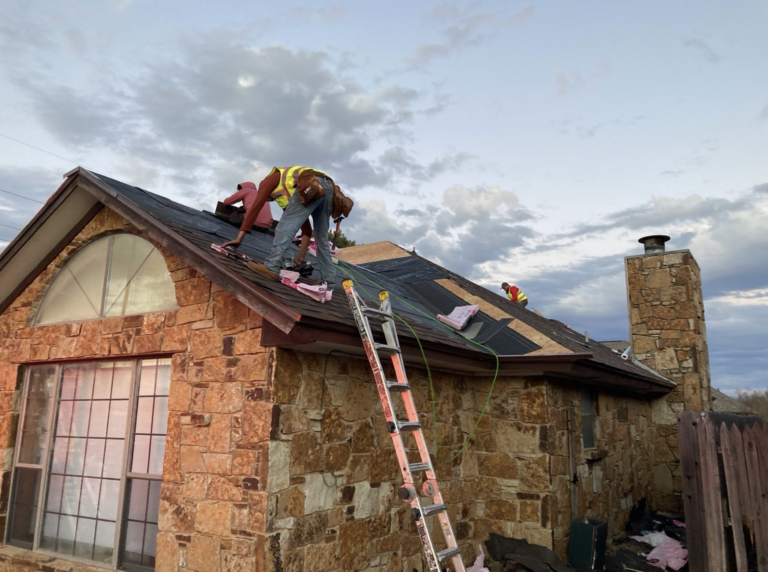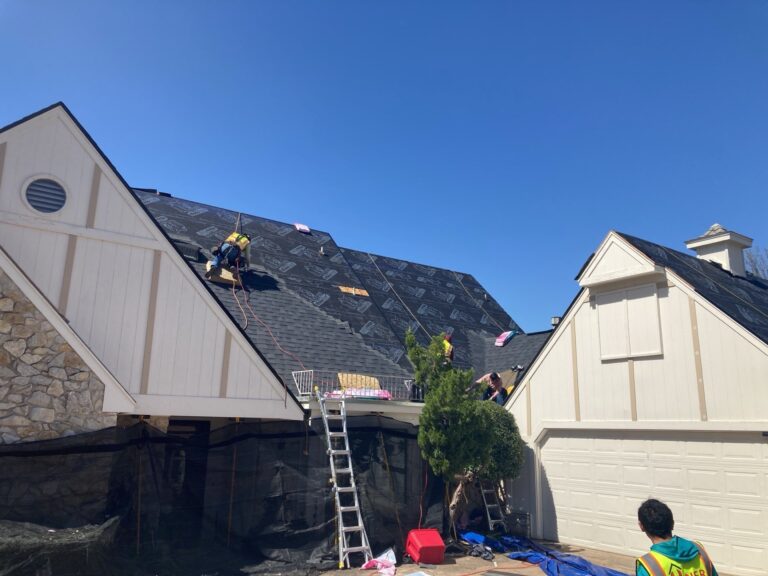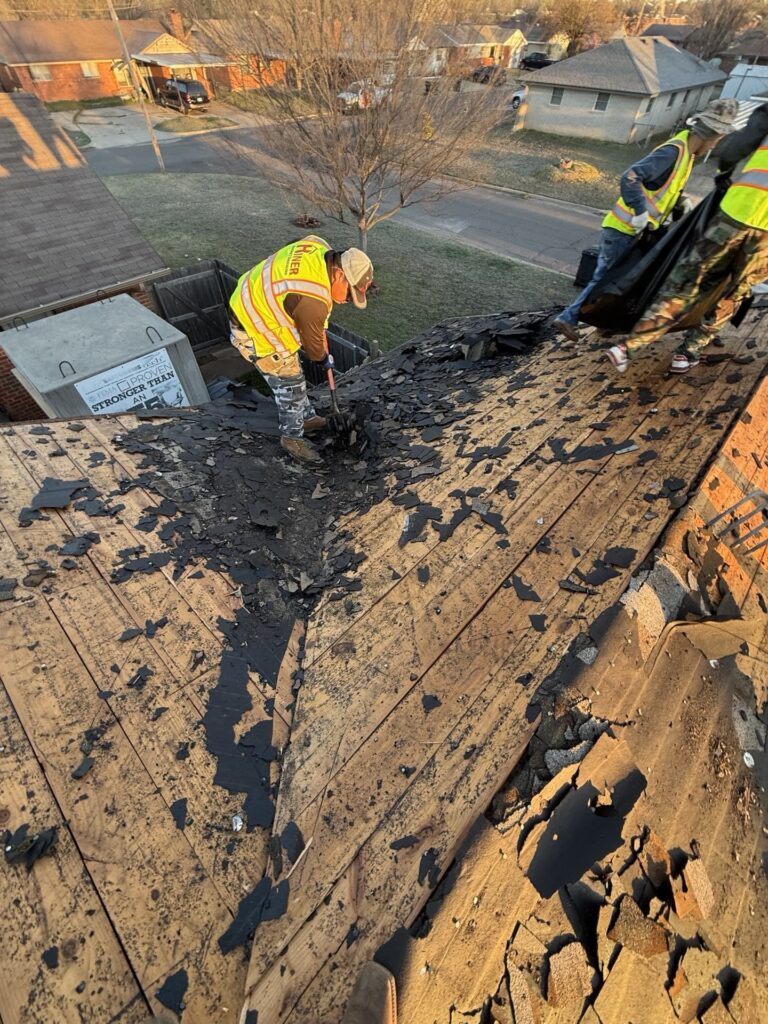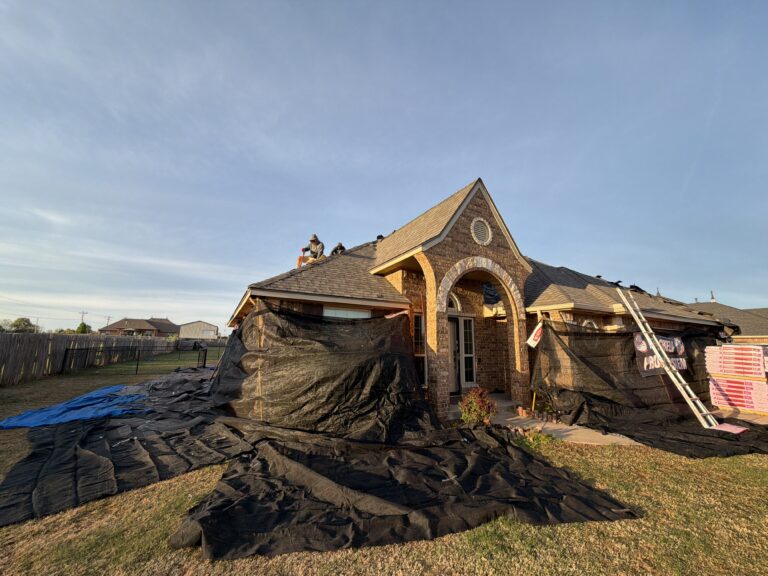
Old roof shingles should be taken to a permitted landfill, an approved asphalt shingle recycling facility, or another authorized construction-and-demolition processor. Asphalt shingles may be recycled into materials used for asphalt pavement when a qualified processor accepts them. Old shingles should not be burned or illegally dumped.
After a roof replacement, a large amount of material can come off the home. That includes asphalt shingles, nails, flashing, underlayments, vents, and sometimes damaged wood roof decking.
For Oklahoma homeowners, responsible roof shingle disposal is therefore an important part of the roof replacement process not something that should be figured out after the roof tear-off is complete.
This guide explains how to dispose of roof shingles, where old roofing materials can go, how asphalt shingle recycling works, what reclaimed asphalt shingles (RAS) may be used for, and what homeowners should expect from their roofing contractor during hauling and cleanup.
What Should You Do With Old Roof Shingles?
Old roof shingles generally have three possible destinations:
- A permitted landfill that accepts roofing and construction debris
- An approved asphalt shingle recycler
- A construction-and-demolition facility that accepts or sorts roofing materials
During a professional roof replacement in Oklahoma City, shingles are usually removed during the roof tear-off and placed in a dump trailer, roll-off container, dumpster, or similar debris container. The material is then transported away from the property.
The best option depends on the material, its condition, available recycling locations, hauling distance, facility requirements, and whether a market exists for the recycled product.
Homeowners completing a roofing project should never assume that every local waste center accepts shingles. Contact the landfill or recycling facility before transporting the material.
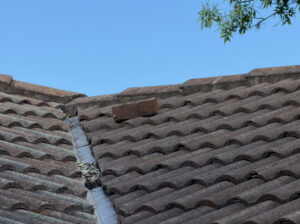
How to Dispose of Roof Shingles in Oklahoma
In Oklahoma, old roofing materials should be handled through authorized disposal or recycling channels.
The Oklahoma Department of Environmental Quality (Oklahoma DEQ) advises roofing companies to use a permitted landfill or recycler and maintain receipts that verify proper disposal.
A typical disposal process looks like this:
- The existing asphalt roofing shingles are removed.
- Underlayments, nails, flashing, and other roofing components are separated or collected.
- Roofing debris is placed in dump trailers, dumpsters, or roll-off containers.
- The exposed roof deck is inspected.
- Damaged decking is removed when necessary.
- The debris is transported to a permitted landfill, recycling facility, or construction-and-demolition processor.
- The jobsite receives a final cleanup and inspection.
For homeowners, this means roof disposal should be part of the project plan before the first shingle is removed.
Where Can You Dispose of Roofing Shingles?
If you’re trying to determine where to dispose of roofing shingles, start by looking for facilities authorized to accept construction and roofing materials.
Permitted Landfills
Landfill disposal remains a common legal option for old shingles when an approved recycling market is not available.
A permitted landfill is very different from dumping shingles on private land, near waterways, on vacant property, or at an unauthorized waste site.
Roofing debris can create environmental and fire concerns when handled improperly, which is why the final destination matters.
Asphalt Shingle Recycling Facilities
Some asphalt shingle recyclers accept roof tear-off material and process it for another use.
Facility acceptance can depend on:
- Contamination levels
- Material type
- Facility capacity
- Hauling distance
- Local recycling requirements
- Available asphalt markets
- Current processing demand
A facility accepting shingles today may change its requirements later, so always confirm before delivery.
Construction-and-Demolition Facilities
Roofing waste may also go to a construction-and-demolition, or C&D, processor.
These facilities may handle several building materials, including:
- Asphalt roofing shingles
- Wood
- Metal
- Nails and fasteners
- Concrete
- Other construction debris
Different materials may be separated for recycling while the remaining waste goes to an appropriate disposal facility.
Are Asphalt Roof Shingles Recyclable?
Yes. Asphalt roofing shingles can be recycled when a qualified recycling facility accepts them.
Asphalt shingles contain materials that may have value after a roof reaches the end of its useful life.
The Asphalt Roofing Manufacturers Association (ARMA) explains that tear-off asphalt shingles can be processed through recycling programs, with paving being one of the primary end markets for the recovered material.
However, recyclable does not mean that every old shingle automatically gets recycled.
Whether shingle recycling is practical depends on:
- Local recycling locations
- Transportation costs
- Facility capacity
- Contamination requirements
- Processing costs
- Local asphalt specifications
- Demand from asphalt mixture producers
This is why contractors should avoid promising that every roofing material will be recycled unless the actual destination can be verified.
How Does Asphalt Shingle Recycling Work?
The asphalt shingle recycling process turns roof tear-off waste into material that may be useful in other products.
Although the exact process varies by facility, it can include several steps.
1. Incoming Material Is Inspected
Loads of waste shingles are inspected for materials that do not belong in the recycling stream.
That may include:
- Wood
- Plastic
- Excess underlayment
- Flashing
- Other construction debris
2. Shingles Are Processed
The asphalt shingles may move through a shingle grinder that reduces them to a controlled size.
3. Nails and Metal Are Removed
Roof tear-offs contain thousands of nails, fasteners, and sometimes pieces of flashing.
Industrial magnets can help remove steel nails and other metal from the processed material.
4. Material Is Screened
The ground shingles may be screened so the finished material meets the processor’s requirements.
5. Reclaimed Asphalt Shingles Are Produced
The processed material is commonly known as reclaimed asphalt shingles, or RAS.
RAS can then become an input for an approved end market rather than being treated only as waste.
The original draft explains that recycling facilities may inspect incoming material, remove contaminants, grind shingles, use magnets to extract metal, and screen the finished RAS.
What Are Reclaimed Asphalt Shingles (RAS)?
Reclaimed asphalt shingles (RAS) are processed asphalt roofing shingles recovered from manufacturing waste or roof tear-offs.
RAS may contain useful asphalt and mineral aggregate.
Instead of viewing every old asphalt shingle strictly as landfill waste, shingle recycling allows some of that material to become an input for another product.
Organizations such as the National Asphalt Pavement Association (NAPA) and asphalt pavement producers have studied the use of recycled materials in asphalt mixtures.
The actual amount and use of RAS depend on state requirements, pavement specifications, material quality, asphalt mixture design, and the capabilities of the producer.
What Are Recycled Roof Shingles Used For?
One of the most established uses for recycled asphalt shingles is asphalt pavement.
Processed waste shingles may contribute asphalt and aggregate to applications such as:
- Roads
- Parking lots
- Driveways
- Asphalt pavement mixtures
- Certain road-base applications
- Some road maintenance products
Your original material correctly identifies pavement as the most common destination for processed shingles and notes uses including roads, driveways, parking lots, and asphalt pavement mixtures.
This creates a useful circular relationship:
Residential roof → roof tear-off → asphalt shingle recycling → reclaimed asphalt shingles → asphalt mixture → pavement
That is one example of how roofing waste may contribute to a broader circular economy when a suitable recycling market exists.
Does Shingle Recycling Improve Pavement?
Reclaimed asphalt shingles provide asphalt cement and aggregate that may be incorporated into certain asphalt mixtures.
However, RAS is an input, not a complete pavement product by itself.
Asphalt mixture producers must consider specifications, material consistency, engineering requirements, and local regulations when determining how recycled material can be incorporated.
Homeowners therefore shouldn’t assume that every road contains recycled roofing shingles or that every asphalt plant accepts RAS.
The important point is that properly processed shingles may have a productive second use instead of going directly to landfill.
Can You Burn Old Shingles?
No. Old roofing shingles should not be burned as a disposal method.
This applies to old asphalt shingles as well.
Burning manufactured roofing materials can create environmental and safety concerns. Old shingles should instead be taken to an approved landfill, asphalt shingle recycler, or other authorized waste facility.
If you’re trying to get rid of old shingles, avoid:
- Burning them
- Dumping them on vacant property
- Burying piles of roofing debris
- Leaving them near creeks or drainage areas
- Using unauthorized dumping sites
The appropriate solution is lawful landfill disposal or recycling.
Can You Burn Old Asphalt Shingles?
Do not burn old asphalt shingles.
Asphalt shingles contain manufactured materials and are not ordinary yard waste.
For a roof replacement project, the better approach is to include tear-off, hauling, disposal, and cleanup in the contractor’s project scope.
That avoids leaving homeowners responsible for figuring out how to dispose of a large pile of roofing waste after installation is complete.
Can Old Roof Shingles Be Reused?
Old tear-off shingles generally should not be installed as the primary roof covering on another home.
There is an important difference between reuse and recycling.
A recycled asphalt shingle is processed into another material.
A reused shingle would be removed from one roof and installed again as roofing material.
Tear-off shingles may have already experienced:
- Oklahoma heat
- UV exposure
- Hail
- High winds
- Rain
- Freeze-and-thaw cycles
- Granule loss
- Seal-strip deterioration
Removal can also affect the shingle’s fastening area, shape, sealing strip, and structural condition.
Those factors make used roof shingles very different from unused roofing products.
The original roofing-material guide similarly notes that tear-off shingles generally should not be reinstalled because removal and weather exposure can affect sealing, fastening, service life, and manufacturer requirements.
What Happens to Nails, Metal, and Flashing?
An old roof contains much more than asphalt shingles.
A roof tear-off may generate:
- Roofing nails
- Screws and fasteners
- Aluminum or steel flashing
- Drip edge
- Valley metal
- Roof vents
- Pipe-boot components
- Gutters
- Metal roofing components
These materials may be recyclable when separated and accepted by a metal or construction-material recycler.
Nails may be:
- Collected during tear-off
- Removed during jobsite cleanup
- Recovered with magnetic sweepers
- Extracted by magnets during shingle recycling
The EPA recognizes metals as an important construction-and-demolition recycling material, while your original draft explains that nails and metal roofing components can follow separate recovery paths.
What Happens to Old Roof Decking?
A complete roof replacement does not normally mean removing every sheet of plywood or OSB.
Once the asphalt shingles and underlayments are removed, the exposed roof deck should be inspected.
Decking may need replacement when it is:
- Rotten
- Soft
- Delaminated
- Moisture-damaged
- Structurally damaged
- Unsuitable for the new roofing system
Some decking problems cannot be seen until roof tear-off begins.
This is why homeowners should ask how unexpected decking work will be documented and priced before signing their roofing contract.
Clean wood may sometimes have recycling opportunities, while wet, rotten, coated, or contaminated material may require disposal.
Can Roofing Underlayments Be Recycled?
Not necessarily.
Roofing felt, synthetic underlayments, and self-adhering membranes can contain fibers, polymers, coatings, and adhesives that make them different from asphalt shingles.
A shingle recycling facility may separate:
- Felt
- Synthetic materials
- Wood
- Flashing
- Plastic
- Other contaminants
For that reason, asphalt shingle recycling does not mean the entire roofing system gets recycled together.
Different roofing components may have different destinations.
What If Old Roofing Materials May Contain Asbestos?
Some older roofing materials may require additional precautions.
Certain historic:
- Roofing shingles
- Roofing felt
- Mastics
- Coatings
- Related building materials
may contain asbestos.
Age or appearance alone cannot reliably confirm whether asbestos is present.
If suspicious material is discovered, it should not simply be mixed with normal construction debris. Testing or assistance from qualified professionals may be required before tear-off or disposal continues.
Safety requirements and disposal regulations can differ when asbestos-containing materials are involved.
Your original material correctly notes that unusual older roofing products may require testing, specialized handling, or licensed asbestos professionals.
How Is Roofing Debris Managed During a Roof Tear-Off?
Good waste management begins before the roofing crew starts removing shingles.
- Dumpster or dump-trailer placement
- Vehicle access
- Landscaping protection
- Air-conditioning equipment
- Children and pets
- Material movement
- Safe crew access
- Site maintenance
- Final cleanup
During roof tear-offs, crews usually work in controlled sections and move material toward the debris container.
Common containers include:
Dump Trailers
Dump trailers can be positioned near the work area and removed once roofing debris has been collected.
Roll-Off Containers
A roll-off container or dumpster may be used on larger roof replacement projects.
Regardless of which container is used, homeowners should know:
- Where it will sit
- How the driveway will be protected
- Who is responsible for hauling it
- Where the roofing material will be taken
- Whether disposal costs are included
Are Roof Tear-Off, Hauling, and Disposal Costs Included?
These items should be clearly identified in the roof replacement proposal.
A complete project scope may include:
- Existing roof tear-off
- Number of roofing layers being removed
- Roll-off container or dump trailer
- Hauling
- Landfill fees
- Recycling costs
- Jobsite cleanup
- Magnetic nail sweeping
- Decking pricing
- Final inspection
Homeowners should ask about these roof replacement cost in Oklahoma before work begins.
A low roofing estimate can become expensive when dumpster rental, hauling, disposal, decking, or cleanup appear later as unexpected charges.
Your original guide similarly recommends confirming tear-off, hauling, landfill or recycling fees, cleanup, and decking pricing in writing.
How Hiner Roofing Handles Old Roofing Materials
At Hiner Roofing, a roof replacement is not complete when the final new shingle is installed.
The old roofing system also needs to be removed responsibly, the exposed deck needs to be evaluated, and the property needs to be cleaned before the project is considered finished.
Our roof replacement process includes:
- Documented roof inspection
- Clear written project scope
- Controlled roof tear-off
- Inspection of exposed roof decking
- Documentation of unexpected conditions
- Responsible roofing-debris removal
- Jobsite cleanup
- Final project review
The goal is for homeowners to understand both what is going onto their roof and what happens to the old roofing materials coming off it.
What Happens During a Complete Roof Replacement?
Frequently Asked Questions
How do you dispose of old roof shingles?
Old shingles should be transported to a permitted landfill, qualified asphalt shingle recycling facility, or authorized construction-and-demolition processor. Confirm the facility accepts roofing material before transporting it.
Where can I dispose of roofing shingles?
Look for permitted landfills, roofing-material recycling locations, or construction-and-demolition facilities in your area. Acceptance requirements vary, so contact the facility first.
How do I get rid of old roof shingles?
For a roof replacement, the simplest option is usually to have the roofing contractor handle tear-off, hauling, disposal, and cleanup. DIY disposal requires finding an authorized facility that accepts the material.
Are roof shingles recyclable?
Yes. Asphalt shingles can be recyclable when an approved processor accepts them. They may be ground and processed into reclaimed asphalt shingles for use in asphalt pavement or related products.
What are reclaimed asphalt shingles?
Reclaimed asphalt shingles, or RAS, are processed asphalt roofing shingles recovered from manufacturing waste or roof tear-offs. The processed material may be used as an input in certain asphalt mixtures.
Are recycled shingles used to make roads?
Yes, processed asphalt shingles can be used in certain asphalt pavement applications. Final use depends on material quality, local specifications, asphalt producers, and available recycling markets.
Can you burn old shingles?
No. Burning old roofing shingles is not an appropriate disposal method. Use a permitted landfill, qualified recycler, or other approved waste facility instead.
Can you burn old asphalt shingles?
Do not burn old asphalt shingles. They should be handled through authorized landfill disposal or recycling.
What happens to roofing nails?
Roofing nails may be collected during tear-off, recovered during cleanup with magnets, or separated from shingles during the recycling process.
Can old shingles be installed on another roof?
Old tear-off shingles generally should not be reused as the primary roof covering. Their sealing strips, fastening areas, granule coating, shape, and remaining service life can be affected by years of weather exposure and removal.
Can I ask my roofer for proof of disposal?
Yes. Homeowners can ask where roofing debris is transported and whether disposal or recycling documentation is available. Oklahoma DEQ advises roofing companies to maintain receipts verifying proper disposal.